
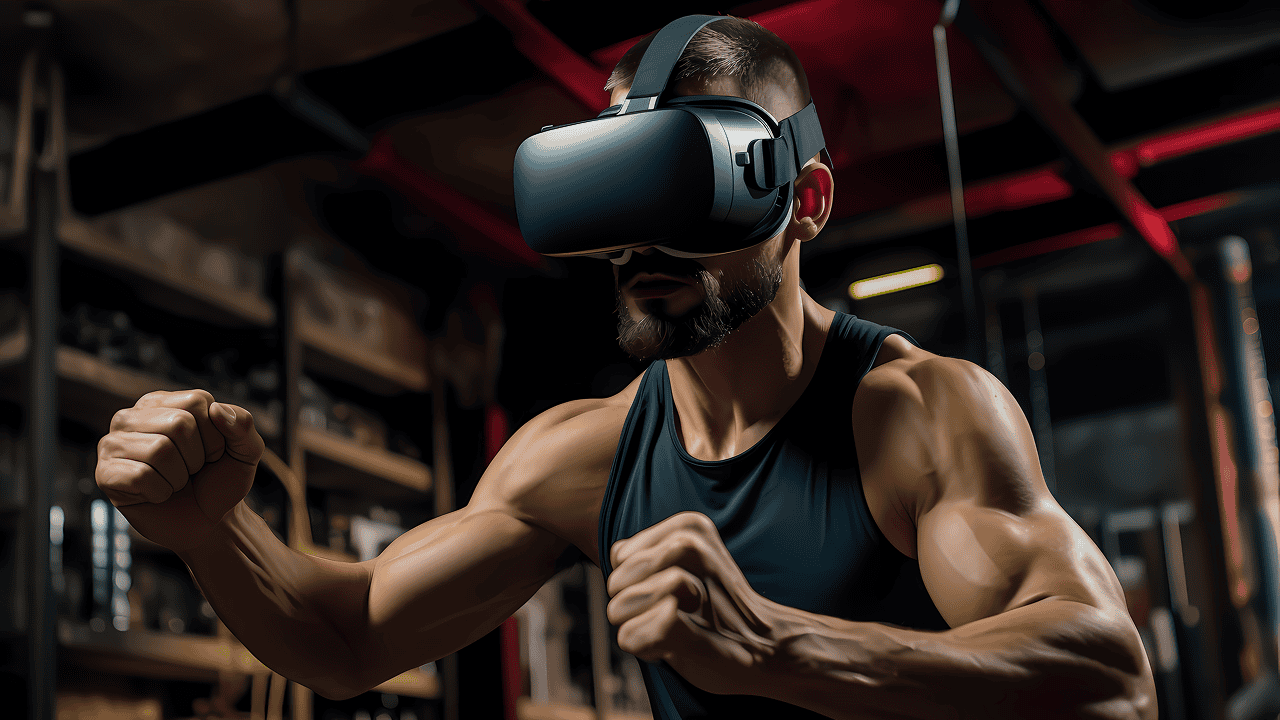
Immersive Tech in Fitness: AR, VR and the Future of Gym Experiences
The fitness industry has always evolved alongside technology, from the introduction of digital treadmills to app based workout tracking. Today, a new wave of innovation is reshaping how people experience exercise, driven by immersive technologies such as augmented reality and virtual reality. These tools are no longer limited to gaming or entertainment. They are steadily entering gyms, studios, and home fitness environments, changing expectations around engagement, motivation, and interaction.
Immersive technology brings workouts to life by blending physical movement with digital environments. Through AR and VR, exercise can feel more like exploration, competition, or play rather than routine effort. As attention spans shrink and consumer expectations rise, gyms are searching for ways to stand out while keeping members engaged. AR VR fitness solutions and immersive gym technology are emerging as powerful answers to these challenges, offering experiences that traditional equipment alone cannot deliver.
Understanding Immersive Technology in Fitness

Immersive technology refers to digital tools that surround or enhance the user’s real world environment. In fitness, this typically takes the form of virtual reality, where users enter a fully simulated environment, or augmented reality, where digital elements are layered over physical surroundings. Both approaches aim to deepen engagement by making workouts more interactive and visually stimulating.
Immersive technology in the gym does not just mean screens or even wearables; rather, it is all about creating an experience that reacts in response to the movement, pace, and intensity of the movements in real time. Immersive fitness experience suits all types of consumers, be they regular gym-goers who are looking for uniqueness in their experience or new consumers who feel threatened by their immediate environment. The combination of physical activity with immersion is what adds value to the experience.
The Rise of AR VR Fitness in Modern Gyms
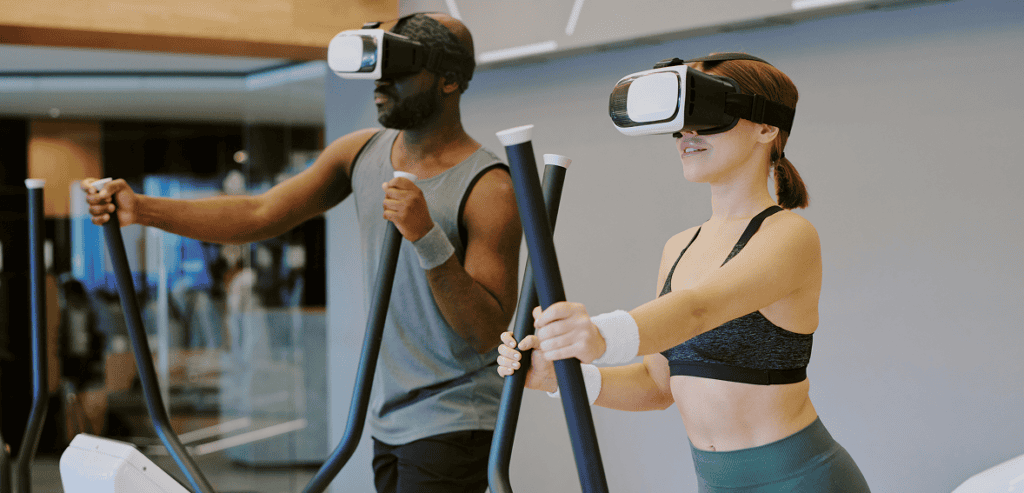
The adoption of AR VR fitness has accelerated as hardware becomes more affordable and content more sophisticated. Headsets are lighter, motion tracking is more accurate, and software ecosystems are expanding rapidly. These improvements make immersive solutions more practical for commercial gym environments.
Gyms adopting immersive gym technology often aim to differentiate themselves in competitive markets. A VR enabled workout area or AR guided training zone creates a sense of innovation that attracts curiosity and media attention. Members are increasingly drawn to experiences that feel personalised and exciting. As technology matures, immersive fitness experiences are shifting from novelty features to integrated parts of gym offerings, influencing how facilities design spaces and structure programs.
Virtual Reality Workouts and Their Appeal

Virtual reality workouts place users inside fully digital environments where exercise becomes part of a game or journey. Wearing a headset, members can row through virtual rivers, box against animated opponents, or climb simulated terrain. These VR workouts gym experiences distract users from fatigue and make time feel shorter, which can improve workout adherence.
Virtual reality gym solutions are particularly effective for cardio based activities and group challenges. The immersive nature of VR encourages users to push harder while maintaining enjoyment. For gyms, VR workouts gym programs appeal to members who enjoy gaming or interactive entertainment. They also provide structured experiences that require minimal instruction once users are familiar with the system. As content libraries grow, VR workouts are becoming more diverse and adaptable to different fitness levels.
Augmented Reality Workouts in Real World Spaces
Unlike VR, augmented reality workouts enhance the real environment rather than replacing it. Using smartphones, tablets, smart mirrors, or wearable glasses, AR overlays digital guidance onto physical exercise. This might include form cues, performance metrics, or animated demonstrations appearing in real time.
The augmented reality workouts allow for correct technique training as users are provided with immediate feedback with regard to their training. For instance, a person performing squat workouts will be provided with guidelines and prompts through a screen or mirror in front of them. The AR-based platforms developed around fitness in gyms conceptualize immersion through AR and VR technology. This allows users to exercise in a familiar environment with additional enhancement through introduced technology. The AR VR fitness platforms are designed not to interfere with gym designs.
Immersive Studio Classes Without Headsets
Not all immersive fitness experiences require personal devices. Some gyms and boutique studios use projections, lighting, and sound to create immersive environments for group classes. Spin rooms with animated landscapes or high intensity classes enhanced by synchronized visuals demonstrate how immersive gym technology can transform the atmosphere without wearables.
These immersive studio environments create collective energy and shared experience. Participants feel transported without needing headsets, reducing barriers for those uncomfortable with VR equipment. From a business perspective, immersive studios allow gyms to upgrade experiences while maintaining high group class capacity. AR VR fitness does not always mean individual immersion. It can also involve spatial design that stimulates multiple senses, making workouts more memorable and engaging.
Benefits of Immersive Fitness Experiences for Members
Immersive fitness experiences offer several psychological and behavioural benefits. By turning workouts into interactive challenges or journeys, they reduce perceived effort and boredom. Members are more likely to return when exercise feels enjoyable rather than obligatory.
Motivation improves when progress is visualised in engaging ways. Immersive gym technology provides instant feedback, rewards, and milestones that reinforce positive behaviour. AR VR fitness platforms often include gamification elements such as levels or achievements, which appeal to competitive and achievement oriented users. These experiences also support mental focus, helping users stay present and connected to their movement. Over time, immersive engagement can improve consistency and long term fitness adherence.
Attracting New Audiences Through Technology
One of the strongest advantages of immersive gym technology is its ability to attract demographics that might otherwise avoid gyms. Younger audiences familiar with gaming and digital interaction often respond positively to AR VR fitness environments. These technologies reduce intimidation by offering guided and entertaining entry points.
Immersive fitness classes cater to individuals who prefer to exercise either alone or independently rather than taking a class environment. Virtual reality gyms let people work out in privacy even when the space is shared. Such flexibility promotes inclusivity and personal preference. With the incorporation of immersion, gyms brand themselves as progressive and culturally relevant, enhancing brand appeal across diverse age and lifestyle groups.
Practical Space and Safety Considerations
Implementing immersive gym technology requires careful planning around space and safety. Virtual reality workouts and gym setups need clear areas free from obstacles to prevent injury. Supervision is essential, especially for new users adjusting to VR environments.
Augmented reality workouts generally pose fewer physical risks but still require clear layout and lighting. Gyms must consider cable management, equipment durability, and sanitation protocols for shared devices. Immersive fitness experiences should enhance safety rather than compromise it. Clear guidelines, onboarding sessions, and staff training help ensure that AR VR fitness installations operate smoothly within commercial environments.
Cost and Investment Challenges
While immersive gym technology offers significant potential, costs remain a key consideration. VR headsets, software licenses, and maintenance represent upfront and ongoing investment. Not every member will use immersive features, making return on investment an important factor.
Gyms can manage risk by starting small with limited VR workouts gym stations or pilot AR programs. Measuring member interest and usage patterns helps inform scaling decisions. Augmented reality workouts can often be implemented through apps and displays, offering lower cost entry points. With strategic planning, immersive fitness experiences can become valuable differentiators without overwhelming budgets.
The Role of Data and Personalisation
Immersive technologies generate large amounts of data related to movement, performance, and engagement. When used responsibly, this data enhances personalisation. AR VR fitness platforms can adapt difficulty levels, recommend workouts, and provide tailored feedback based on individual performance.
Personalized immersive fitness experiences increase levels of satisfaction and retention among members, as users of immersive fitness feel accepted and helped rather than merely processed through a series of fitness programs, as opposed to gyms that could benefit from data-driven analytical tools that aid in improvement.
Marketing and Brand Positioning Advantages
High tech offerings naturally attract attention. Gyms offering AR VR fitness experiences often benefit from stronger word of mouth and social media visibility. Virtual reality gym classes and immersive studios are visually compelling, making them ideal for promotional content.
Immersive gym technology also signals innovation and leadership. This perception helps gyms stand out in competitive markets. Even limited immersive fitness experiences can elevate brand image when positioned thoughtfully. For many facilities, the marketing value of immersive technology complements its functional benefits, supporting both growth and differentiation.
The Future of Immersive Fitness Technology
As technology advances, immersive fitness experiences will become more intuitive and accessible. Hardware will continue to improve, reducing discomfort and increasing realism. Content will expand to include more training styles, accessibility features, and integration with traditional equipment.
AR VR fitness is also a field which is expected to integrate with artificial intelligence. This is a field which might become routine instead of extraordinary. As the demands of fitness enthusiasts change, so might the nuances of such fitness centers. By engaging with such technology early on, gyms stand to gain valuable competency.
Conclusion
Immersive technology is redefining how fitness is experienced, delivered, and perceived. Through AR VR fitness solutions, gyms can create engaging, personalised, and memorable environments that motivate members in new ways. Immersive gym technology supports enjoyment, focus, and consistency while offering businesses fresh opportunities for differentiation. Virtual reality gym experiences, augmented reality workouts, and immersive studio environments represent more than trends. They signal a shift toward experience driven fitness that blends physical movement with digital innovation. For gym owners and members alike, immersive fitness experiences open the door to a future where exercise feels more interactive, inclusive, and inspiring than ever before.
Frequently Asked Questions
What is immersive technology in fitness and how does it work in gyms?
Immersive technology in fitness refers to the use of digital environments and overlays that enhance physical workouts through interaction and simulation. In gyms, this typically includes AR VR fitness solutions such as virtual reality gym stations where members exercise inside digital worlds, or augmented reality workouts that layer guidance and performance data onto real movements. These systems respond to motion and intensity, making workouts feel more engaging while still delivering physical results. Immersive gym technology blends exercise with visual and sensory stimulation to improve motivation and consistency.
Are VR workouts safe for regular gym members?
VR workouts gym experiences can be safe when implemented properly with adequate space, supervision, and user education. Gyms usually designate clear areas for virtual reality gym sessions to reduce the risk of collisions. Staff guidance during onboarding is important, especially for first time users. When safety protocols are followed, immersive fitness experiences can be both enjoyable and secure for most members.
How is augmented reality different from virtual reality in fitness?
Augmented reality workouts enhance the real environment by adding digital instructions or visuals, while virtual reality places users inside a completely simulated space. AR VR fitness solutions serve different needs. Augmented reality workouts are often used for form correction, coaching, and technique guidance, whereas virtual reality gym setups focus more on immersive cardio and game like training. Both contribute to immersive gym technology but in distinct ways.
Do immersive fitness experiences replace traditional workouts?
Immersive experience in fitness does not replace traditional workouts but simply adds to them. There are many gyms that utilize different immersive gym technologies in addition to traditional ones. There are AR and VR in fitness that provide users with different experiences and more choice. It has been seen that workouts such as lifting and training remain an essential part of healthy living.
Is immersive gym technology expensive for fitness centres to implement?
The cost of immersive gym technology varies depending on scale and complexity. Virtual reality gym setups often require higher upfront investment, while augmented reality workouts can be introduced through apps, screens, or smart mirrors at lower cost. Many gyms begin with limited AR VR fitness installations to test interest before expanding. Starting small helps balance innovation with financial feasibility.
What type of gym members benefit most from immersive fitness experiences?
Immersive fitness experiences appeal to a wide range of members, including beginners who want guided support and experienced users looking for variety. Younger members familiar with gaming often enjoy virtual reality gym sessions, while augmented reality workouts benefit those focused on technique and performance. Immersive gym technology is especially effective for members who value engagement, feedback, and motivation as part of their fitness journey.
Leave a Reply